
Skip the Alps? Why Digital Nomads Are Trading St. Moritz for Central Asia This Winter
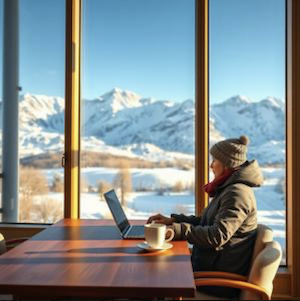
You’re halfway through December. Snow is falling. Your laptop is open. And the rates in Zermatt just made your eyes water.
What if I told you that you could ski world-class slopes on weekends, keep your remote job, and pay the equivalent of a New York cocktail for a full dinner?
Here’s the thing. Central Asia isn’t just having a moment. It’s positioning itself as the alternative to overcrowded European ski destinations, with marketing that emphasizes two things the Alps can’t buy: affordability and the absence of crowds.
The 60-Day Welcome Mat
Let’s talk logistics first, because none of this matters if you can’t get in the door.
Kazakhstan offers visa-free entry for up to 30 days for citizens of the European Union, United States, United Kingdom, Japan, and South Korea. Kyrgyzstan goes even further, offering up to 60 days of visa-free access for a wide range of countries. That’s two months without paperwork headaches.
Getting there?
Simpler than you’d think. Almaty connects directly to Istanbul, Dubai, Seoul, and Frankfurt. Bishkek is comfortable, too—reachable via Almaty or through direct flights from Istanbul and Dubai. No red-eye connections through obscure airports. No embassy visits that eat your lunch breaks. Just book, board, and work from the mountains.
Two Cities, One Epic Backdrop
Picture waking up on a Tuesday.
Almaty, Kazakhstan’s largest city, hosts a metropolitan population exceeding two million residents. It sits in the foothills of the Trans-Ili Alatau mountains. On clear mornings, you drink coffee while staring at peaks that make your Instagram followers jealous.
Here’s the kicker: Shymbulak ski resort is located just 25 kilometers from Almaty city center. Twenty-five kilometers. You could finish a client call at noon and be carving turns by two. Day trips aren’t just possible; they’re routine.
Then there’s Bishkek, Kyrgyzstan.
Around 1.2 million people as of 2024. Situated near the border with Kazakhstan, the capital puts you within driving distance of Chunkurchak, Kashka-Suu and Zil. The Tien Shan mountain range is visible from Bishkek on clear days, creating a dramatic backdrop that makes your coworking calls look like green-screen trickery.
If you are willing to Travel 5 or 6 hours, you can get the weekend to Karakol ski base and the nearby Jyrgalan resort, which is being developed into the Ala-Too Resort. The first slopes are planned to open next season and it will grow out to a mega resort with 250 km slopes over the coming years.
Europe Without the Credit Card Debt
Let’s be honest about the Alps.
They’re magnificent. They’re also hemorrhaging your savings account. Lift tickets that cost more than car payments. Chalets that charge hotel rates for broom closets.
Central Asia flips the script entirely.
The ski season in Central Asia typically runs from December through March, overlapping with European winter but offering a completely different cultural and geographic experience. SkiCentralAsia.com documents twelve ski resorts across Kazakhstan, Kyrgyzstan, and Uzbekistan, with several major expansion projects currently under construction.
Translation? The infrastructure is growing while the crowds are still thin.
Winter temperatures in Almaty and Bishkek are cold but comparable to many European ski towns. The difference is simple: proper heating infrastructure in buildings means you’re not sacrificing comfort, just inflated price tags.
The Infrastructure Is Real
“But can I actually work from there?”
Yes.
Both Almaty and Bishkek have established coworking spaces and cafes with reliable internet, supporting remote work infrastructure without the Silicon Valley attitude. Kazakhstan has been investing heavily in tourism infrastructure as part of its economic diversification strategy, including airport expansions and new hotel developments.
Kyrgyzstan brings its own advantages. The country has an established reputation among backpackers and adventure travelers, which creates an existing ecosystem of hostels, tour operators, and English-speaking services. You’re not figuring things out in a vacuum. The connections are already there.
Proof It Works
Still skeptical?
B12, a New York-based company, established a team in Bishkek. They published an article about their experience building a remote office there, specifically citing the mountain views and cost advantages as determining factors. When a Manhattan firm relocates operations to Kyrgyzstan for the economics alone, that tells you something profound about value.
The region offers a combination of urban amenities and immediate access to mountain landscapes that European capitals can’t match. Almaty and Bishkek are proper cities. They have restaurants, gyms, nightlife, and culture. But they also give you what digital nomads in Lisbon and Berlin desperately miss: the ability to work during the week and ski on weekends.
The Numbers Don’t Lie
Let’s talk money because this is where the decision gets easy.
The cost of living in Almaty and Bishkek is significantly lower than in Western European capitals or major US cities, particularly for accommodation and dining. Local cuisine in both countries is meat-heavy, authentic, and affordable. Meals at local restaurants cost a fraction of equivalent options in Western Europe—think hearty stews and fresh bread for less than you’d pay for a coffee in Zurich.
You get metropolitan population density with mountain access. You get December through March of ski season. You get direct flights from major hubs. You get 30 to 60 days without visa stress.
What’s Your Plan?
The Alps will still be there next year.
Overcrowded. Overpriced. Overcrowded.
Or you could spend the winter with the Tien Shan outside your window, Shymbulak 25 minutes away, and a bank account that doesn’t need CPR when you check your balance.
The flights to Almaty are booking. The visa-free clock starts when you land. The mountains are waiting.
Which inbox do you want to check emails from this December?