
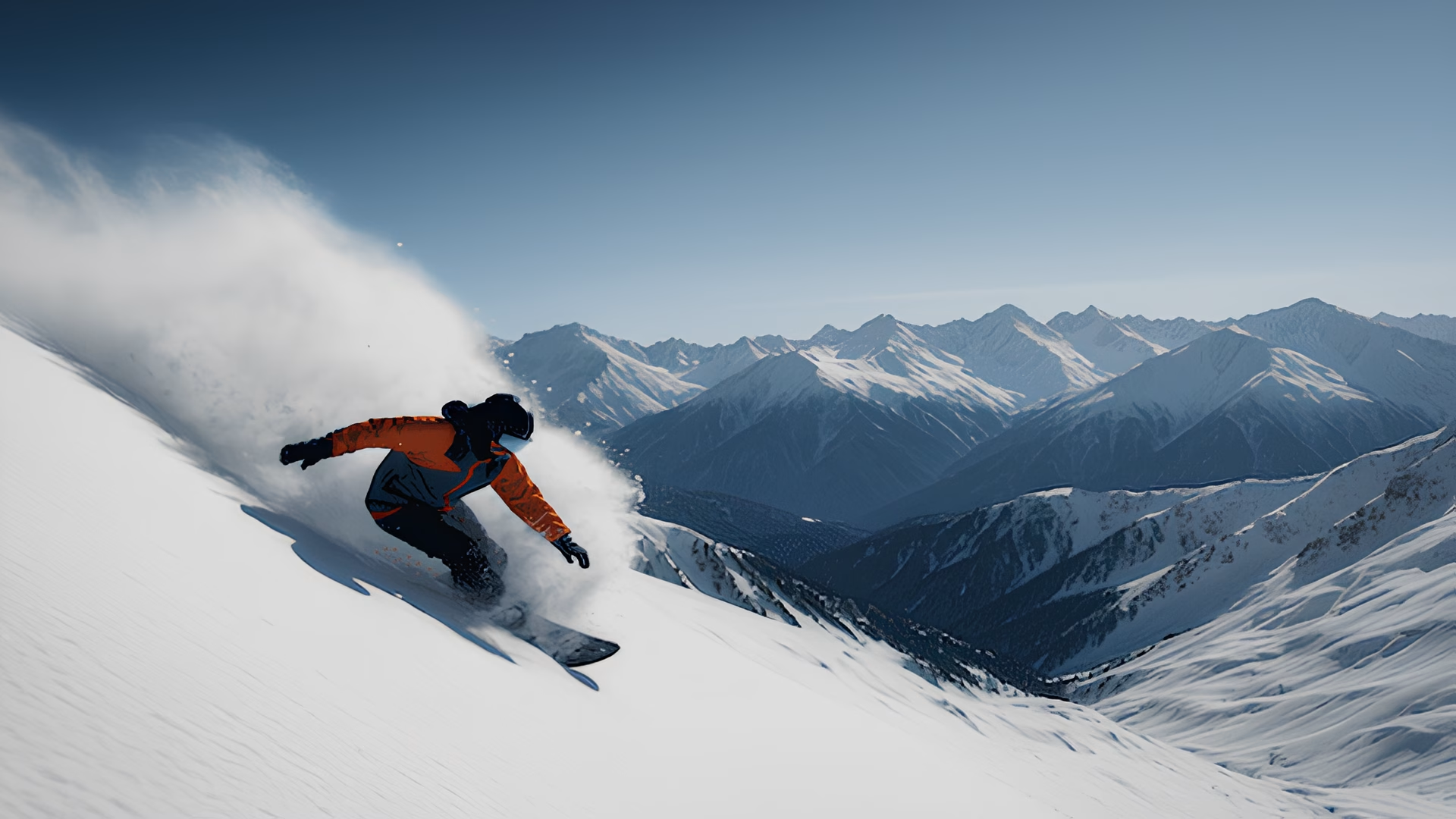
Ak-Bulak Ski Resort
As part of the Ala-Too project, Ak-Bulak is set to become another new ski and mountain destination in Kyrgyzstan
Phase 2 of Ala-Too Resort · High-alpine adventure terrain · 2027 target · Part of 250 km connected ski domain
Some links are affiliate — we may earn a commission at no extra cost to you.
About Ak-Bulak
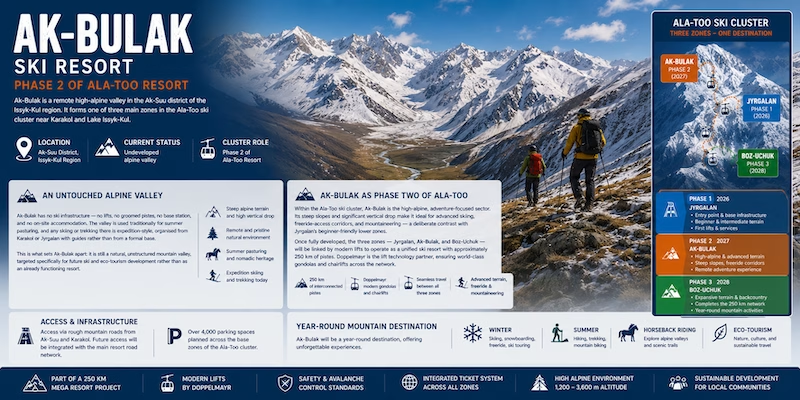
Ak-Bulak is a mountain valley and peak area in the Ak-Suu district of the Issyk-Kul region of Kyrgyzstan. It forms one of three main zones — alongside Jyrgalan and Boz-Uchuk — in the Ala-Too ski cluster near Karakol and Lake Issyk-Kul.
Where Is Ak-Bulak?
Ak-Bulak lies in a remote, high-altitude alpine landscape with steep slopes and significant vertical drop, accessed by rough mountain roads from the Ak-Suu and Karakol side. The valley sits within the Tien Shan mountain range, east of Karakol and inland from Lake Issyk-Kul’s southern shore.
An Untouched Alpine Valley
Today, Ak-Bulak has no ski infrastructure — no lifts, no groomed pistes, no base station, and no on-site accommodation. The valley is used traditionally for summer pasturing, and any skiing or trekking there is expedition-style, organised from Karakol or Jyrgalan with guides rather than from a formal base. This is what sets Ak-Bulak apart: it is still a natural, unstructured mountain valley, targeted specifically for future ski and eco-tourism development rather than as an already functioning resort.
Ak-Bulak as Phase Two of Ala-Too
Within the Ala-Too ski cluster, Ak-Bulak is positioned as the high-alpine, adventure-focused sector. Its steep slopes and significant vertical drop make it suitable for advanced skiing, freeride-access corridors, and mountaineering — a deliberate contrast with Jyrgalan’s beginner-friendly lower zones. While Jyrgalan serves as the entry point for the cluster, Ak-Bulak is designed to host the more demanding terrain.
Once fully developed, the three zones — Jyrgalan, Ak-Bulak, and Boz-Uchuk — will be linked by lifts to operate as a unified ski resort with approximately 250 km of pistes. Doppelmayr is referenced as the lift technology partner, meaning Ak-Bulak will receive modern gondolas and chairlifts as part of the network. Guests will be able to move between zones without leaving the mountain environment.
Ak-Bulak is expected to become one of the upper, more remote nodes of the interconnected ski area, anchored by Jyrgalan and Boz-Uchuk for initial access and base infrastructure. The cluster includes over 4,000 parking spaces at the base zones, and Ak-Bulak’s access will be planned from these areas rather than ad-hoc local parking. Year-round use is envisioned: winter skiing and snowboarding in season, with summer hiking, horseback riding, eco-tourism, and mountain biking in the warmer months.
What's Planned for Ak-Bulak
Lifts and Ski Infrastructure
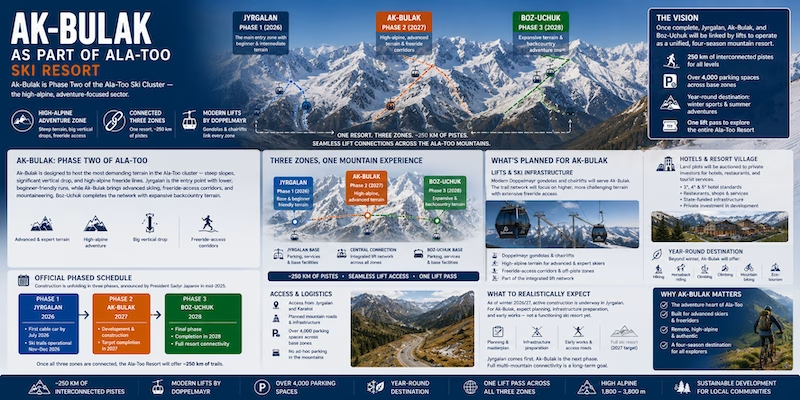
Ak-Bulak will receive modern Doppelmayr gondolas and chairlifts as part of the Ala-Too lift network. Its trail system will emphasise higher, more challenging terrain and freeride-access corridors — deliberately distinct from the beginner-dominated lower zones in other parts of the cluster. Given the valley's steep slopes and large vertical drop, Ak-Bulak's share of the planned 250 km of trails is expected to favour advanced and expert-level skiing.
Hotels and Resort Village
The state intends to auction land plots within the cluster for private investors to build hotels, restaurants, and tourist services. This implies a defined Ak-Bulak resort village area in the masterplan, with hotels across 3-, 4-, and 5-star standards — though individual plots for Ak-Bulak have not yet been publicly enumerated. Infrastructure costs (roads, utilities, lifts) are financed by the state, with private investment driven by these auctions.
Year-Round Destination
Beyond winter skiing and snowboarding, Ak-Bulak is planned for year-round use: summer hiking, horseback riding, eco-tourism, climbing, and mountain biking. The valley's high altitude and remote setting make it a natural base for more demanding alpine routes once trails and shelters are built — positioning Ak-Bulak as the adventure-focused, all-season node of the Ala-Too cluster.
When Will Ak-Bulak Be Built?
Ak-Bulak's development is tied to the phased build-out of the entire Ala-Too Resort. President Sadyr Japarov announced in mid-2025 that construction had begun, with each of the three mountain zones receiving its own phase.
Official Phased Schedule
Construction is unfolding in three phases. Jyrgalan (Phase 1) launches with its first cable car by July 2026 and ski trails operational by November–December 2026. Ak-Bulak (Phase 2) is targeted for completion in 2027. Boz-Uchuk (Phase 3) follows in 2028, completing the cluster. Once all three zones are connected, the resort will offer 250 km of trails at full capacity.
Some international reports previously referenced a 2035–2040 build-out window for Ak-Bulak. This reflects the original concept, which has been superseded by the 2027 target in the president's 2025 statement. However, given the project's scale and typical lead times for high-altitude lift networks, timelines may shift with budget, logistics, and environmental assessments.
What to Realistically Expect
As of winter 2026/27, you will see active construction in Jyrgalan — see our Jyrgalan page for details. For Ak-Bulak, the realistic picture is planning, infrastructure preparation, and potentially early works — but not a functioning ski resort yet. The most solid anchor is that Jyrgalan comes first, Ak-Bulak is a later phase, and full multi-mountain connectivity is a long-term goal rather than something already in place.
Visiting Ak-Bulak Today
Until resort infrastructure is built, Ak-Bulak remains a wild, unstructured mountain valley. There are no lifts, no groomed pistes, no base station, and no on-site accommodation. Any visit is expedition-style, requiring preparation and local knowledge.
Winter: Backcountry and Ski Touring
In winter, Ak-Bulak is used for backcountry exploration and ski touring by small groups of experienced skiers. These trips are organised from Jyrgalan or Karakol with local guides — not from a formal Ak-Bulak base. The valley is accessed by rough mountain roads from the Ak-Suu side, and there are no facilities on-site.
Summer: Trekking and Eco-Tourism
In summer, the valley sees trekking, horseback riding, and eco-tourism in the broader Issyk-Kul and Ak-Suu mountains. As in winter, there are no dedicated built facilities in Ak-Bulak itself — the experience is entirely self-supported or guide-organised.
Where to Stay
There is no accommodation in Ak-Bulak. Current visitors base themselves in Jyrgalan village, Karakol, or along the shore of Lake Issyk-Kul, and travel to the valley from there.
Frequently Asked Questions
Is there a ski resort at Ak-Bulak?
When will Ak-Bulak ski resort open?
Is Ak-Bulak in Kazakhstan or Kyrgyzstan?
How is Ak-Bulak connected to Ala-Too Resort?
Can I ski at Ak-Bulak now?
Are there hotels at Ak-Bulak?
Latest Articles
Fresh stories from the slopes of Central Asia
One Visa, Three Mountain Ranges: Azerbaijan Joins Central Asia’s Single Permit Push
Kyrgyzstan's president has put a common tourist visa covering Central Asia and Azerbaijan back on the table. For skiers, that would mean three mountain ranges…
Read more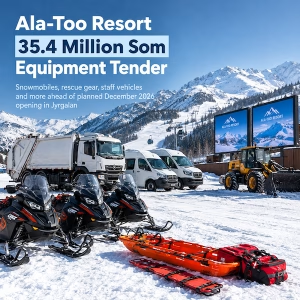
Ala-Too Resort Buys 35.4 Million Som of Winter Gear Ahead of Its December Opening
On October 6, 2026, Kyrgyzstan's flagship mountain cluster posted a public tender for snowmobiles, rescue equipment, a compactor truck and groomers. It is the clearest…
Read more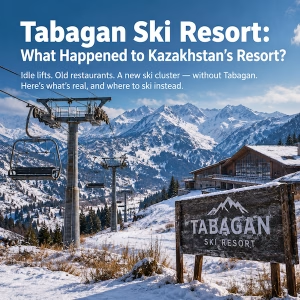
Tabagan | Kazakhstan’s Abandoned Ski Resort and the Future of Almaty Skiing
Tabagan’s cableways are idle, its old restaurants survive only in archived listings, and Kazakhstan is building a new Almaty ski cluster without it. Here is…
Read moreExplore More of Ala-Too
Ak-Bulak is one part of a larger story. Follow the development of the Ala-Too cluster through its other zones and the parent project.
Looking beyond Ala-Too? Explore all skiing in Kyrgyzstan across the Tien Shan.


