
Construction is officially underway on Almaty Superski, the massive mountain tourism project linking Medeu, Shymbulak, Kok-Zhailau and Kumbel with POMA lifts, timber architecture, and international environmental standards
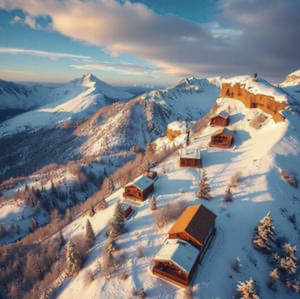
On June 3, 2026, something shifted in the Zailiyskiy Alatau range. Construction crews arrived. After years of preparation, Almaty Superski officially left the drawing board.
Kazakhstan’s state news agency Qazinform reported the transition this morning. Prime Minister Olzhas Bektenov chaired the meeting that sealed the decision. Yerzhan Yerkinbayev, Chief Executive Officer of KTD, briefed participants on current progress before officials approved the practical implementation phase. The deadline is set: December 2028. That’s when you’re invited to experience a mountain cluster designed differently from anything else in Central Asia.
The Team That Won the World
Here’s what separates this project from earlier Kazakh ski developments. The contracts didn’t go to familiar faces through backroom deals. They went through open tenders watched by independent international consultants PGI, Hill International, and DCSA.
The French won the ropes. POMA, founded in 1936 and responsible for roughly 8,000 projects across 90 countries, will install 11 modern ropeways. We’re talking 3S gondolas—the three-rope systems that European and North American resorts use for wind stability and high capacity in brutal alpine terrain. Plus 10-passenger gondola lifts and chairlifts. This isn’t hobbyist equipment. It’s the same technology moving millions at the world’s major resorts.
The Canadians bring the wood. StructureCraft, one of the world’s leading specialists in mass timber construction, will deliver the building structures. Forget the concrete-and-steel brutalism typical of post-Soviet ski development. This is timber, selected specifically to align with environmental goals and the architectural concept developed by Foster + Partners, the international architectural firm.
The Americans manage the chaos. Hill International, based in the United States, coordinates design, construction, scheduling, and project management through both preparation and implementation. They’ve done this dance before.
Why Timber Changes the Game
Look at the existing Shymbulak resort. It stands as Kazakhstan’s largest ski destination with a vertical drop of approximately 1,000 meters, base elevation at 2,200 meters, and top elevation hitting 3,200 meters. Beautiful. And overcrowded.
Almaty Superski connects Medeu, Shymbulak, Kok-Zhailau, and Kumbel into a single regulated system. But the construction philosophy breaks from tradition. StructureCraft’s mass timber approach represents a deliberate departure from the concrete-and-steel norms of regional ski development. The structures will breathe differently, age differently, and leave a different legacy in the Zailiyskiy Alatau range.
The Environmental Promises That Matter
Deputy Prime Minister and Minister of Culture and Information Aida Balayeva has been clear. This isn’t a single infrastructure project tucked into a government budget line. It’s part of a comprehensive plan for the Almaty mountain cluster. And here’s the commitment that matters: Kok-Zhailau lands will remain part of the Ile-Alatau National Park. They keep their protected status.
The infrastructure itself becomes a tool for environmental protection. Visitor limits will cap daily numbers. Planned routes will concentrate foot traffic. Ecological monitoring and visitor education programs will run alongside the lifts. Scientific oversight and public monitoring aren’t buzzwords here; they’re written into the compliance requirements.
Prime Minister Bektenov instructed officials to ensure strict oversight of not just deadlines and quality, but specifically international safety and environmental standards. The message is clear: develop without destroying.
Built for Real Families, Not Just Athletes
Visit Shymbulak today and you’ll notice something. It’s steep, fast, and intimidating for beginners, elderly visitors, or families with strollers. Almaty Superski tackles this head-on.
The planned facilities include cable cars yes, but also safe trails, visitor centers, viewing platforms, and basic sanitary infrastructure. The design priority isn’t maximum adrenaline. It’s accessibility for families, elderly people, and visitors with limited mobility.
The connected system deliberately distributes tourist flows across Medeu, Shymbulak, Kok-Zhailau, and Kumbel. This takes pressure off Shymbulak, which currently shoulders most of the region’s tourism weight. You’re looking at regulated public infrastructure, not a closed private resort.
The Tourism Numbers Driving This Decision
Why spend more than a billion dollars on mountain infrastructure? By 2026, the answer is increasingly visible in the numbers.
Kazakhstan recorded nearly 11.8 million tourism trips in 2025, including more than 10.2 million domestic trips. Demand for outdoor recreation and mountain tourism continues to grow, while national parks are seeing record levels of visitation. Across the country, annual visits to national parks climbed from 2.4 million in 2023 to 3.7 million in 2025.
The pressure is especially visible around Almaty. The Almaty Mountain Cluster welcomed approximately 2.9 million visitors in 2025, making it the country’s busiest mountain tourism region. Ile-Alatau National Park alone attracted nearly one million visitors.
The challenge is no longer attracting visitors. It is managing them. Existing infrastructure around Medeu and Shymbulak was never designed to accommodate millions of annual visitors while simultaneously protecting fragile mountain ecosystems.
That is the logic behind Almaty Superski. Officials expect the project to distribute tourist flows across Medeu, Shymbulak, Kok-Zhailau, and Kumbel, reduce pressure on overcrowded areas, improve safety and accessibility, and create new opportunities for local businesses throughout the mountain cluster.
Balayeva has repeatedly stressed that development must proceed with public consultation, environmental oversight, and strict compliance with legal requirements. The government’s position is that Almaty Superski should function as regulated public infrastructure within a protected mountain environment rather than as a closed private resort.
Your December 2028 Invitation
Mark the date. When these lifts start turning in December 2028, you’ll ride POMA’s 3S gondolas—the same technology trusted from the Alps to the Rockies. You’ll enter buildings crafted by StructureCraft’s timber expertise, designed by Foster + Partners, managed by Hill International’s coordination.
You’ll stand at 3,200 meters elevation looking down at 1,000 meters of vertical drop. But you’ll also stand in a visitor center built to international environmental standards, in a national park that kept its protected status, on infrastructure designed for your grandmother as much as for the adrenaline junkie.
The tenders were open. The oversight was independent. The construction is underway. Almaty Superski isn’t just coming. It’s being built the hard way—the right way.