
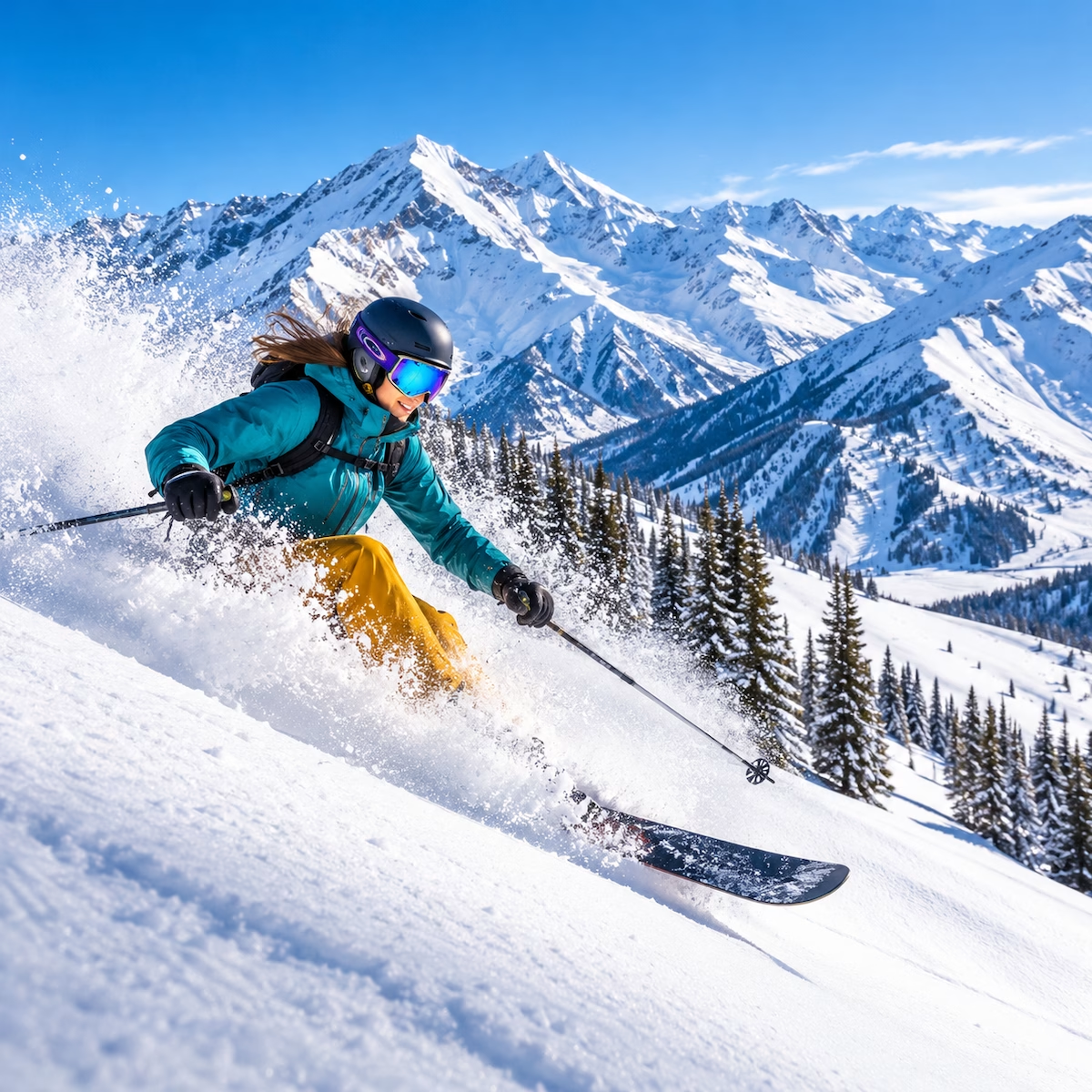
Discover the untapped powder of Kazakhstan and Kyrgyzstan: from remote Altai snowcat terrain and traditional yurt-based touring to some of the world’s most affordable mechanised freeride skiing. Three extraordinary destinations, exceptional continental powder, and a backcountry experience far beyond the usual ski circuit.
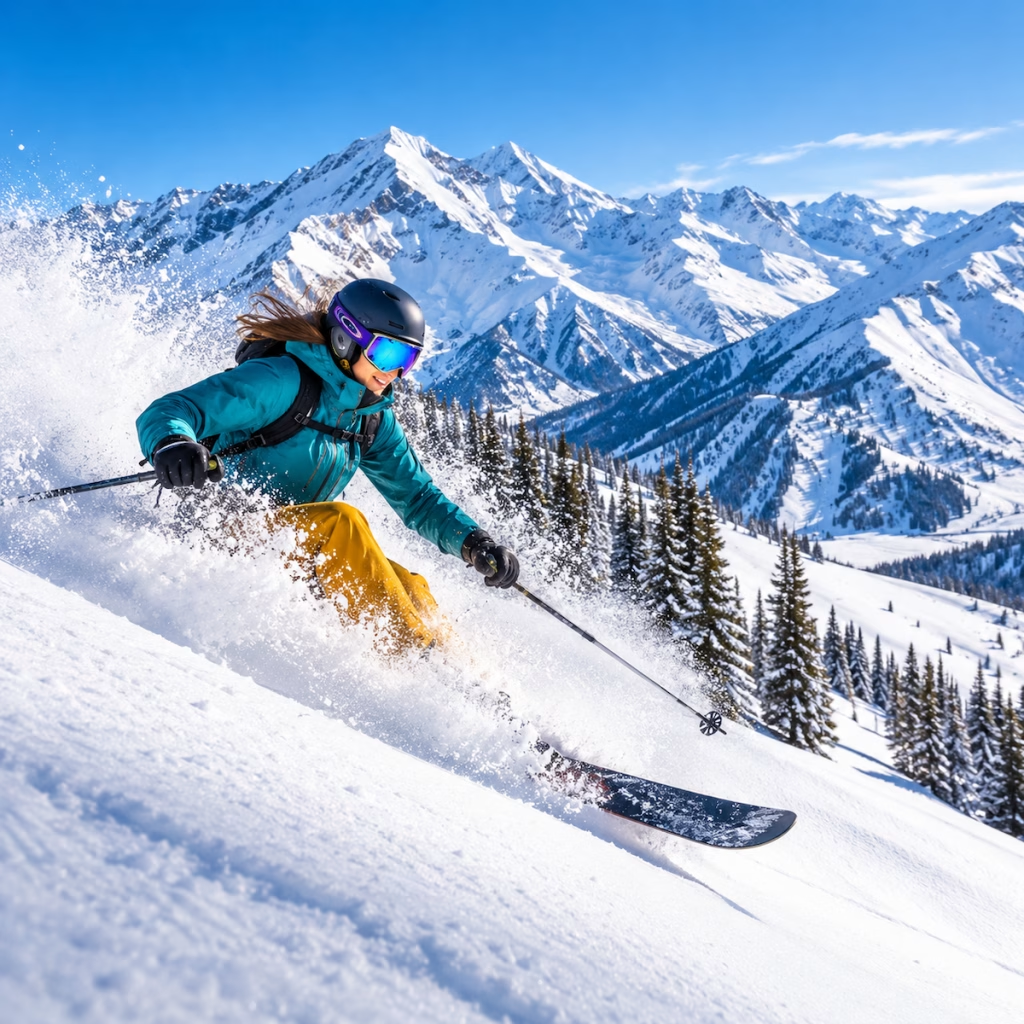
You can buy a full snowcat day in the Suusamyr Valley for about $130 per person. Guide and lunch included. In Chamonix, that would not cover a coffee and a lift pass.
Central Asia is not a secret anymore. But the freeride skiing still is.
Most riders who think about this region picture the heli-skiing brochures out of Bishkek. Those are real. What fewer people know is that underneath the heli operations, there is a layer of snowcat terrain, yurt-based touring, and lift-accessed sidecountry that costs a fraction of what you would pay in Alaska, Japan, or the Alps.
And the snow is unlike anything you have skied before.
There are three freeride destinations in Central Asia that are worth flying for. Not worth a detour. Not interesting if you happen to be in the neighborhood. Worth getting on a plane for.
The snow is not what you’re used to
Before the destinations, you need to understand the snow. Because it will change how you ride here.
Central Asia has an extreme continental snowpack. It is cold, dry, and dominated by depth hoar. Weak layers form early in the season and persist for weeks, sometimes months. They do not melt out and refreeze the way they do in a maritime climate.
This is a fundamentally different hazard regime from Japan’s wet, maritime snow or the Alps’ transitional pack. Habits you picked up in Hokkaido or Chamonix will not necessarily hold here. Terrain that looks skiable in a photo might need a week of settling before anyone touches it.
That sounds intimidating, and it should. But there is an upside. The same cold, dry conditions that make the snowpack tricky also keep the powder cold and dry for longer than it would stay in a warmer climate. The snow quality holds. You just need to respect the process that creates it.
3 freeride destinations in Central Asia worth flying for
Western Altai / Ridder: snowcat country
Ridder is a mining town in East Kazakhstan, close to the Russian border. It sits in the Western Altai mountains at about 700 meters elevation, and the touring terrain rises to 2,500 meters across five separate ridge systems.
This is the most established mechanised freeride hub in Central Asia. Snowcat is the primary access model. Rides to ridgetops take 20 to 50 minutes, and single descents run 450 to 1,100 meters through Siberian cedar, larch, and birch forest below treeline, opening into alpine bowls and couloirs above.
Dress for the thermometer, not the photo. Winter temperatures commonly hit minus 20 to minus 26 degrees Celsius. The cold is what keeps the powder dry. It also means you need to pack for it.
Snowcat packages start around 1,800 euros per person for roughly seven days. That includes accommodation, meals, guiding, and cat access. A heli-ski day runs about $800 per person for a 12-person group.
The nearest airport is Oskemen (UKK), a two-hour drive from Ridder. You can fly Almaty to Oskemen domestically in about 90 minutes.
What makes Ridder different is the texture. This is not one giant face with a cat running laps beneath it. It is five ridge systems spread across more than 100 square kilometers of skiable terrain. You explore different ridges and snow climates each day. Glades, pillows, and creek features at lower elevations. Alpine couloirs and open bowls higher up. The Altai gets more moisture than the Tien Shan, so the snowpack is deeper, but natural avalanches during and after storms are common.
You stay in Ridder itself, or in lodges in the nearby Ulba valley. A sauna, a drying room, and a warm stove matter more than polished decor. This is a working mining town, not a resort village. That is part of the appeal.
Freeride Tours in Kazakhstan
Kazakhstan
8 Day Ski Touring in Western Altai
Ski touring in the Western Altai takes you to Ridder, a small town in northeastern …
from $2,140 per personSee Dates
Winter Alatau 5-Day Ski Tour
The Winter Alatau 5-day ski tour programme runs in the Ile Alatau mountains above Almaty. …
from $730 per personSee Dates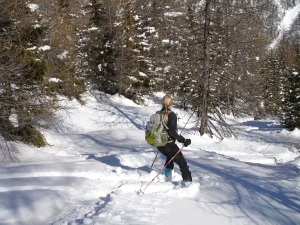
1-Day Backcountry Tour
The 1-day backcountry tour is FrozenRocks Backcountry Adventures' most popular programme — a single day …
from $148 per personSee DatesJyrgalan: the freeride village
Jyrgalan is a former coal-mining village in the Terskey Ala-Too range, about 75 kilometers east of Karakol. When the mine closed, the community rebuilt itself around trekking and, increasingly, winter touring. The village sits at 2,100 meters, surrounded by seven peaks reaching 3,500 meters.
What sets Jyrgalan apart is not the terrain, which is excellent, but the culture. This is the only place in Kyrgyzstan where you can ski from a village guesthouse, eat dinner with the family who runs it, sleep in a heated yurt, and repeat for a week without seeing another group. The community tourism model means your money stays in the valley.
Single descents reach 500 to 1,250 meters. The lower slopes are forested with Tien Shan spruce, providing sheltered skiing on storm days. Above treeline, open meadow bowls and alpine faces up to 40 degrees open up. North-facing aspects preserve cold powder longer.
Three access modes operate from the village. You can skin in directly from your guesthouse door. You can book a snowmobile tow for about $120 per person. Or you can book a snowcat day at 150 to 250 euros per person. Horses carry gear on longer approaches, which is exactly as Kyrgyz as it sounds.
Jyrgalan has competitive pedigree. The 2022 Silk Road Freeride Competition was held here on the Competition Face route, which includes sections up to 55 degrees. If you have seen photos of Central Asian freeride, there is a decent chance they were taken in this valley.
Getting to Jyrgalan takes commitment. Fly into Bishkek (BSZ), drive 400 kilometers to Karakol in five to seven hours, then another 75 kilometers to Jyrgalan. There used to be no chairlifts in the valley. The Ala-Too Resort, opening December 2026, brings lift-served skiing to Jyrgalan for the first time.
But the freeride character that put this village on the map remains. You can still skin from your guesthouse door, or pay a snowmobile to help you earn your turns. The snowpack here is what local Russian freeride reports call “sugar sand.” Faceted crystals, very loose, producing excellent powder but high avalanche risk.
Freeride Tours in Kyrgyzstan
Kyrgyzstan
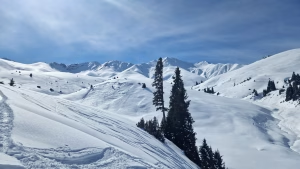
8 Day Ski Touring at Jyrgalan Valley
Jyrgalan Valley sits in the Terskey Ala-Too range of Kyrgyzstan's Tien Shan, a scenic 5-hour …
from $2,030 per personSee DatesSuusamyr: the cheapest powder on the planet
The Suusamyr Valley is a high-altitude steppe south of Bishkek, reachable in about 2.5 hours over the Too-Ashuu pass. The valley floor sits at 2,200 to 2,600 meters, surrounded by peaks reaching 4,500 meters.
This is Kyrgyzstan’s mechanised freeride heartland. The reason is simple: the valley is enormous, there are no lifts, and the only way to cover the terrain is by snowcat or helicopter. The snowcat rate runs about $130 per person per day, guide and lunch included. That is among the lowest cat-skiing rates in the world.
The playground is approximately 1,000 square kilometers of open alpine bowls, long faces, and gullies. Very little tree skiing. The terrain looks mellow from a distance, and there are shoulders suitable for less experienced groups. But the broad appearance hides serious avalanche paths. Do not confuse gentle-looking with low consequence.
The cold is the reason the snow stays good. Daytime temperatures sit around minus 20 degrees Celsius. Nights drop to minus 35. That extreme cold drives what locals call champagne powder formation. The dry, continental climate produces exceptionally dry, cold snow that behaves differently from anything you have ridden in Japan or the Alps.
Suuslodge operates two snowcats with capacity for about 14 passengers. Helicopter days are also available, with eight-day packages starting around $3,990 per person. KAGAN runs yurt-based touring programs from a winter camp at 2,800 meters in the Otmok area.
The Too-Ashuu pass road can close after heavy snow. Build slack into your itinerary.
Where else you can freeride
Four other areas in Kazakhstan and Kyrgyzstan have legitimate freeride terrain. None are destination freeride spots the way Ridder, Jyrgalan, and Suusamyr are, but all are worth knowing about if you are already in the region.
Karakol, on the eastern shore of Issyk-Kul, has the largest lift vertical in Central Asia at 740 meters. The sidecountry is good, and the surrounding Ak-Suu and Ichke-Jergez valleys push into high-alpine touring with yurt camps as overnight bases. February is the most dangerous month for depth-hoar instability here.
The Almaty mountains (Zailiysky Alatau) offer Shymbulak’s 940-meter lift vertical and sidecountry that gets tracked by noon. The real value is the Tuyuk-Su glacier area above, which offers spring ski-mountaineering descents of 1,200 to 1,500 meters among 4,000-meter peaks. There is also a Soviet cosmic-ray station at 3,340 meters that you can sleep in, which is not a sentence you can write about many ski destinations.
Turgen Gorge, 70 kilometers east of Almaty, offers yurt-based tree skiing with 500 to 900-meter descents. A heli-plus-yurt combination is available through Heliski.kz. And Ketmen Ridge, 20 kilometers from the China border, opens the Tien Shan season earlier than Almaty with horse-supported hut touring and 600 to 1,000-meter descents. A five-day package costs 460 to 500 euros per person.
Getting there
Two airports matter for freeride skiing in Central Asia. Almaty (ALA) for Kazakhstan, and Bishkek Manas (BSZ) for Kyrgyzstan.
Almaty has direct flights from London, Frankfurt, Istanbul, Dubai, Seoul, and Beijing. Bishkek has no direct London or New York service. You will connect through Istanbul or Dubai.
Kazakhstan grants 30 days visa-free to EU, US, UK, Canadian, and Australian citizens. Kyrgyzstan grants 60 days. Both are painless. Show up with a passport and you are in.
For Ridder, fly Almaty to Oskemen (UKK) domestically in about 90 minutes, then drive two hours. For Jyrgalan and Suusamyr, fly into Bishkek and drive. The Karakol run is 400 kilometers in five to seven hours along the south shore of Issyk-Kul. Suusamyr is 158 kilometers in 2.5 hours over the Too-Ashuu pass.
The avalanche reality
This is the part that separates Central Asia from the Alps. There is no Alpine-standard avalanche infrastructure.
Kyrgyzstan’s snowreport.kg covers Jyrgalan, Karakol, and Suusamyr using a five-level danger scale. It is the only slope-relevant daily product in the region. It is published by mountain guides, not a government agency.
Kazakhstan’s Kazhydromet issues regional avalanche forecasts but no daily slope-scale bulletins. There is nothing ski-specific for Uzbekistan or Tajikistan.
Helicopter rescue is not on standby. In Kyrgyzstan, the Mountain Rescue Service can mobilize a helicopter, but it requires pre-registration and insurance with at least 30,000 euros of evacuation coverage. Actual costs can reach $5,000 to $7,000 or more in remote areas.
The Kyrgyz Mountain Guides Association (KMGA) has been an IFMGA member since December 2017. IFMGA-certified guides are available but scarce. Kazakhstan has fewer. A resort guide is not automatically qualified for glacier travel or steep ski mountaineering. Verify credentials before you commit.
Satellite communicators are not optional here. Phone coverage disappears in most valleys. A two-way satellite messenger is a practical necessity for any backcountry group.
What it costs
A guided freeride week in Central Asia runs about $2,000 per person per week with accommodation, meals, guiding, and mechanised access included. That is roughly half of a comparable guided week in the Alps, and a fraction of what a heli or cat week costs in Alaska or Japan.
The trade-off is vertical. Single runs typically deliver 500 to 1,200 meters, which is smaller than what you would ski in Alaska or British Columbia on a heli or cat operation. You get more runs, more days, and more terrain for your money. You just do not get the 2,000-meter single descents that make Alaska famous.
Gear rental is available in Almaty and Karakol, but high-end fat skis and splitboards are limited. Bring your own boots and bindings. Touring skis and avalanche gear can be rented locally.
Choosing your trip
The three destinations serve different appetites. Ridder is for riders who want mechanised powder and the texture of Siberian taiga forest, with a mining-town base and cold that keeps the snow dry for weeks. Jyrgalan is for skiers who want the village experience, touring from a guesthouse door, horse-assisted approaches, and a community that built a freeride economy from a closed coal mine. Suusamyr is for those who want the biggest open terrain at the lowest cat-skiing price on the planet, and do not mind minus 35 at night.
You can also sample freeride skiing without committing to a full week. The Almaty mountains offer single-day backcountry touring above a city of two million, and the Zailiysky Alatau has five-day hut-based programs for riders who want a shorter taste of the Tien Shan.