
Nearly 510,800 Business Visitors Hit Kazakhstan’s Resort Areas in H1 2026, and the Almaty Mountain Cluster Took Almost Four Out of Five
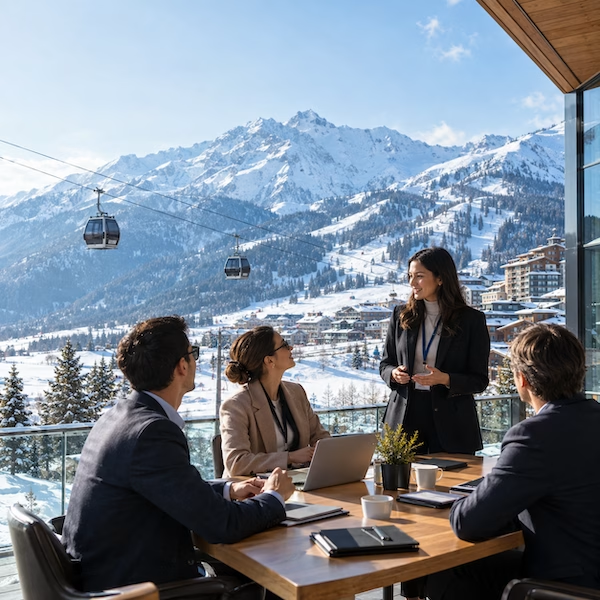
Think of Kazakhstan’s mountains and you probably picture weekend skiers. Now add the boardroom.
In the first half of 2026, the country’s resort areas received 510,800 visitors traveling for business and professional purposes, according to an analysis by Ranking.kz published by The Astana Times on October 13, 2026.
One cluster absorbed most of that demand, and the spending data behind it explains where Kazakhstan’s tourism money is heading next.
Almaty Mountain Cluster Takes 77% of the Market
The Almaty Mountain Cluster attracted nearly 395,000 of those travelers, equal to 77.3% of all business visitors to Kazakhstan’s resort destinations.
Put another way, more than three of every four business and professional visitors to a Kazakh resort area stayed in the Almaty Mountain Cluster.
Kazakhstan is building business tourism along two tracks at once. The first hosts international MICE events in major cities. The second moves business gatherings directly into resort destinations, where the conference room comes with a cable car outside the window.
The cluster’s climb has been steady rather than sudden. Between 2020 and 2025, the number of business and professional travelers staying at accommodation facilities there increased 2.5 times.
In 2025, accommodation facilities in the cluster accommodated 925,700 business and professional visitors, up 7.1% from 2024. The Bureau of National Statistics recorded that business tourism at Kazakhstan’s resort areas exceeded 1.1 million visitors in 2024 and 2025 combined, with nearly one in four guests at resort accommodation facilities traveling for business purposes.
City events feed the same pipeline. The Ministry of Tourism and Sports reports that Kazakhstan hosted 13 major MICE events in 2025, generating nearly $18 million in revenue, up 20% from 2024. International events held in Almaty contributed nearly $3 million to the city budget that year.
Who is filling those rooms? Of the 510,800 business visitors to resort areas in H1 2026, 64% were Kazakhstani nationals and 36% were foreign visitors.
Where the Money Went, and Why Skiers Should Care
Accommodation facilities in Kazakhstan’s resort areas generated 91.2 billion tenge, about $202.1 million, in services in H1 2026.
The spending data reveals another part of the story. Across Kazakhstan, foreign visitors traveling for business and professional purposes spent 5.4% more year-on-year, with accommodation spending up 9.7% and food spending up 7.7%. These figures cover inbound business and professional visitors nationwide, not just those visiting resort areas.
The fastest-growing expenditure categories tell a sharper story: culture-related activities up 24.1%, recreational and sporting activities up 22.2%, and medical and wellness services up 13%.
Ranking.kz analysts note that these spending patterns suggest business trips to Kazakhstan may increasingly be blended with leisure, cultural experiences and wellness activities. A conference in Almaty can offer opportunities to add a museum visit, a hike or a spa day to the itinerary, even if the data does not establish how frequently business travelers do so.
For skiers and snowboarders, that shift has a practical implication. Business tourism can provide an additional source of demand for mountain hotels, restaurants and resort facilities beyond traditional leisure travel. Corporate gatherings and incentive trips may help businesses attract customers outside the conventional holiday calendar, although the figures do not establish whether mid-week occupancy has increased or whether ski resorts are experiencing quieter slopes.
It also widens the country’s revenue base. Growth in MICE tourism at resort destinations gives Kazakhstan a path to diversify tourism income beyond traditional leisure travel.
The Almaty Mountain Cluster’s dominance signals more than a busy conference calendar. The region is moving toward a year-round tourism model, in which corporate incentive trips and conference attendees can help sustain the resort ecosystem beyond the main leisure season.
If you are planning a mountain trip here, a growing year-round tourism economy could mean a broader range of accommodation, dining and activity options. Whether that translates into more mid-week services or quieter slopes depends on the individual resort and season. Book a mid-week stay and you may find a quieter mountain experience, but the business tourism figures alone cannot guarantee it. What they do show is that Kazakhstan’s mountain destinations are attracting visitors for reasons that extend well beyond skiing.